


How Can I Tell What Kind of Wood My Furniture Is? A UK Buyer's Guide to Perfect Matches
In my experience, buying matching furniture online is tricky. So many times, I've ordered pieces that looked like a match, only for them to arrive and not match at all. Unless you know exactly what type of wood your furniture is made from, it's really hard to get it right. It could be veneered oak, reclaimed wood, solid oak, pine – and there are so many other types of wood used in furniture here in the UK.
Why 'Matching Wood' Isn't as Simple as It Looks
Listen, darling, that frustrating moment when you unwrap your new designer side table only to find it bears absolutely no relation to your existing pieces? That's not just bad luck – it's what happens when we don't know what we're working with.
Let me be absolutely clear about this. The wood in your home tells a story, and if you're trying to add chapters without knowing the language, you'll end up with a nonsensical mess. I see it constantly in homes across Britain – from lavish London apartments to characterful cottages in Durham – gorgeous modern pieces sitting awkwardly beside imposters because someone didn't do their homework.
Oak isn't just oak, and pine isn't just pine. Each has personalities as distinct as the difference between Waitrose and Lidl. One isn't necessarily better than the other, but my God, they're not interchangeable!
The UK's Most Common Furniture Woods: Oak, Pine, Reclaimed & Beyond
Oak: The British Standard Bearer
Oak has been Britain's furniture backbone for centuries, and do you know why? Because it's magnificent. Full stop.
Visual Clues: What you're looking for here is a distinctive grain with visible growth rings and those little flecks (medullary rays) that shoot across the grain like sunbeams. Proper English oak has a golden-honey tone that, unlike most of us, actually improves with age.
Weight Test: If you can lift that "oak" sideboard with one hand, it's not oak. Genuine oak has substance – it's unapologetically heavy. That weight speaks to its quality and longevity. Your back might complain, but your eyes will thank you for decades.
Age Indicators: Listen, those "oak effect" pieces with uniformly perfect coloring? They're the equivalent of too much Botox – trying desperately to look like something they're not. True oak develops a depth of color and character that can't be faked (though God knows they try).

When I walk into a home with well-cared-for oak furniture, I immediately know I'm dealing with someone who understands value beyond the price tag. Those clean lines of a contemporary oak dining table or the refined silhouette of a mid-century oak sideboard speak to thoughtful curation rather than impulsive acquisition.
Brands like Oak Furnitureland have built their entire reputation on the timeless appeal of this wood, offering an impressive range of modern oak pieces that work beautifully in both traditional and contemporary North East homes – from Newcastle terraces to Northumberland country estates. Their collections demonstrate why oak remains the gold standard for those who want furniture to last generations, not just seasons.
Pine: The Chameleon of British Homes
Pine is the great pretender of British furniture – so versatile it can be anything from farmhouse-rustic to Scandinavian-sleek.
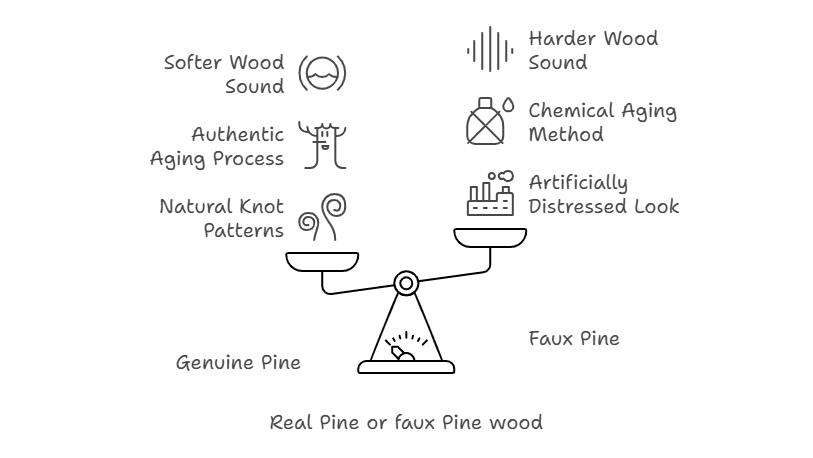
Visual Clues: Those knots are the giveaway – nature's fingerprints all over your furniture. New pine starts life pale as an English summer, but give it twenty years, and it transforms to rich amber tones that most mass manufacturers try (and catastrophically fail) to replicate with stains.
Age Deception: Here's where retailers are playing you for a fool! That "antique pine" console table in the catalog? It's new pine with a chemical bath and some artificial distressing. The difference between that and genuine aged pine is like comparing a supermarket ready meal to your grandmother's Sunday roast in Teesside.
The Knock Test: Tap your knuckles against pine – it sounds different because it is different. That higher pitch tells you immediately it's softer than oak or mahogany. Knowledge is power, darling.
Pine furniture can be absolutely gorgeous in the right setting – especially those Scandinavian-inspired pieces that let the wood's natural character shine through with minimal treatment. High-quality pine pieces from designers like Børge Mogensen or Charlotte Perriand show how this humble wood can achieve true sophistication in the right hands.
Mahogany: The Aristocrat
Mahogany has been beloved in fine furniture for centuries, lending its distinctive character to both traditional and modern designer pieces.
Visual Clues: That rich reddish-brown with a straight grain that catches the light like silk? That's what you're after. True mahogany has depth and dimension that veneer copies simply cannot achieve, no matter how cleverly they're processed.
The History Check: Mahogany has graced everything from Georgian antiques to mid-century masterpieces. In contemporary designer furniture, it's often used selectively for its warmth and distinctive color – perhaps in the legs of an otherwise minimalist piece or as dramatic drawer fronts against a lighter carcass.
Sustainability Context: Quality modern mahogany furniture should come with proper certification. If your retailer can't tell you exactly where their mahogany came from, walk away. There are too many fantastic alternatives to support dubious sourcing.
Walnut: The Sophisticated Choice
Walnut is the quiet achiever – less common than oak but capable of absolute magnificence in the right piece.
Visual Clues: That chocolate-to-purplish spectrum with occasional dramatic streaks is unmistakable when you know what you're looking for. English walnut tends toward the lighter end, while American black walnut brings that deeper drama.
Context Matters: A mid-century walnut dining table by Hans Wegner has a completely different character than a contemporary walnut media unit. Both are walnut, but they're speaking different design languages entirely.
The Finish Factor: Walnut under Danish oil versus walnut under modern polyurethane might as well be different woods. The finish transforms the grain's appearance dramatically, so when matching pieces, the finish is as important as the wood itself.
Mango: The Contemporary Favorite
Over the last decade, mango wood has emerged as a stunning alternative in designer furniture circles.
Visual Recognition: Mango wood offers a fascinating variety of grain patterns and color variations – from golden honey tones to deeper olive streaks. It's distinctive without being showy.
Sustainability Credentials: One of mango's biggest selling points is its eco-friendly nature – these trees are primarily grown for fruit, and the wood is essentially a by-product once they've passed their fruit-bearing prime.
Designer Appeal: Mango wood furniture has been embraced by contemporary designers for its sustainability story and beautiful natural variations. It takes both natural oils and colorful stains beautifully, making it incredibly versatile for modern interiors. Those striking bookshelves or media consoles with warm honey tones and distinctive grain? Likely mango.
Reclaimed Wood: The Sustainable Storyteller
Right, let's talk about reclaimed wood – the darling of every exposed-brick coffee shop from Shoreditch to Sunderland.

Authenticity Check: Genuine reclaimed timber has lived a life before meeting you – it bears the scars, nail holes, and color variations to prove it. Mass-market "reclaimed-effect" furniture is the equivalent of pre-ripped jeans – trying desperately to look authentic while being anything but.
Source Revelation: Anyone selling genuine reclaimed wood should be able to tell you exactly what it used to be. Old Yorkshire mill beams? Victorian floorboards from Tynemouth? Weathered timbers from Tyne shipyards? Each has a distinct character and patina that affects how it works in your space.
The Designer Approach: What separates thoughtful designer reclaimed pieces from the mass-market versions is restraint. Rather than making "distressed" the entire personality, quality reclaimed furniture lets the wood's history enhance a sophisticated design. This is where retailers like Barker and Stonehouse excel – their reclaimed wood collections balance rustic character with clean, modern lines. Their Teesside roots give them an intuitive understanding of how industrial materials can be reimagined for contemporary North East homes.
Step-by-Step: How to Identify Your Furniture's Wood Type

Veneer vs. Solid Wood: Spotting the Difference
Time for some brutal honesty. Is your furniture actually made of solid wood, or is it wearing a thin disguise of veneer over manufactured board? There's no shame in either, but for God's sake, know which you're dealing with.
Edge Inspection: Look at the edges, darling – they never lie. Solid wood shows continuous grain patterns around corners. Veneered pieces show a distinct line where that decorative layer ends and the substrate begins.
Weight Reality: Solid wood furniture requires effort to move. If you can rearrange your dining set single-handedly without breaking a sweat, it's almost certainly veneered MDF underneath.
The Corner Revelation: Examine those joints properly. Traditional woodworking leaves evidence – dovetail joints, mortise and tenon connections. Many contemporary designer pieces use modern joinery techniques that are equally precise but different – finger joints or thoughtfully integrated metal hardware that complements rather than hides.
Material Honesty: Here's where we separate design integrity from deception. Quality designer furniture – even when using veneers – doesn't pretend to be something it's not. There's a world of difference between a stunning walnut veneer carefully selected for grain pattern by a serious designer and a printed "wood-effect" covering.
The packaging might say "oak furniture" – but is it solid oak, oak veneer on MDF, or (heaven help us) oak-effect printed paper on chipboard? These distinctions matter enormously when trying to find matching pieces.
Grain Pattern Analysis: Your Wood's Fingerprint
Think of wood grain as nature's identifier – as unique and telling as fingerprints.
Oak's Signature: Those growth rings and flecks across the grain are oak's calling card. English oak typically has a straighter, less showy grain pattern than European oak. It doesn't need to show off – it knows its worth.
Mahogany's Tell: Look for that tight, uniform grain that appears liquid when the light catches it properly. Fakes can't achieve that depth.
Pine's Honesty: Those knots tell you everything – they're like nature's signature, irregular and characterful. The grain flows around them in ways that simply cannot be mimicked convincingly.
Walnut's Drama: The most theatrical of woods, walnut often displays striking color variations even within a single piece. Its grain can range from straight to spectacularly figured.
Mango's Personality: Mango wood features distinctive, often swirling grain patterns with occasional small dark mineral streaks. The color ranges from golden to medium brown, sometimes with olive undertones that distinguish it from other woods.
Take proper photographs of your existing furniture in natural light. Compare them to reference images from reputable sources like the Wood Database. Don't rely on memory – it will betray you at the checkout.
The History & Style Method: Dating by Design
The style of your furniture can tell you exactly what wood to expect before you even look at the grain.
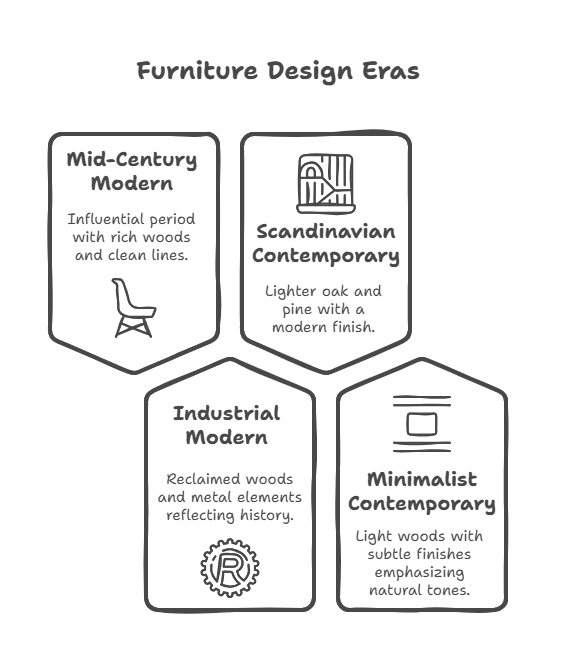
Mid-Century Modern (1940s-1970s): Teak, rosewood and walnut dominated this influential period. Danish and British designers like Arne Jacobsen and G-Plan created pieces with clean lines that let these rich woods speak for themselves. The distinct honey-brown of teak is particularly associated with this era.
Scandinavian Contemporary (1980s-Present): Oak makes a major comeback here, often lighter in finish than traditional English oak. Pine also features prominently, but treated with respect rather than drowning in orange stain.
Industrial Modern (2000s-Present): Reclaimed woods paired with metal elements, often allowing the wood's history to show through. This aesthetic has particular resonance in the North East, where Barker and Stonehouse has brilliantly channeled the region's industrial heritage into contemporary furniture that feels authentic rather than affected. Their reclaimed collections offer a nod to the area's shipbuilding and manufacturing past without descending into cliché.
Minimalist Contemporary (2010s-Present): Light oak, ash and maple predominate, often with barely-there finishes that preserve the wood's natural pale tones. The grain is allowed to be a subtle feature rather than a dramatic statement. Oak Furnitureland's modern collections often exemplify this lighter, cleaner approach to traditional materials.
If your sideboard screams 1970s design, insisting it's oak when it's almost certainly teak is like claiming your platform boots are actually riding shoes. Period and design conventions matter hugely in identifying woods correctly.
The Touch Test: Feeling Wood's Character
Your fingertips can reveal what Instagram filters try to hide.
Temperature Test: Solid wood feels warmer to the touch than manufactured alternatives. It's alive in a way that laminates and melamine simply aren't.
Texture Assessment: Run your fingers against the grain. Oak has a distinctive texture – slightly rough even when finished. Mahogany and walnut feel smoother naturally. Pine is soft enough that your fingernail can leave a small dent with firm pressure. Mango wood typically has a smooth finish but with subtle variations that you can feel under your fingertips.
The Tap Test: Knock firmly on your furniture. Solid wood produces a dulled, substantial sound. Veneer over hollow areas sounds brighter and more resonant – almost like tapping on a drum.
These hands-on tests are invaluable when descriptions are vague and lighting is deceptive. Trust what your fingers tell you.
Online Shopping Hacks: Avoiding Mismatch Disasters
Decoding Listing Terminology: What Retailers Actually Mean
The furniture industry speaks its own language – mostly designed to confuse you into making expensive mistakes. Let me translate:
"Oak Finish": This means "not oak at all." It's pine, MDF or chipboard wearing an oak costume. The deception is perfectly legal but utterly misleading.
"Solid Wood": Astonishingly, this can refer to solid softwood (usually pine) with a hardwood veneer. Manufacturers exploit the technicality that it doesn't contain particle board. Look specifically for "solid oak" or "solid walnut" if that's what you're after.
"Oak Tops": Translation: only the visible surface is oak. The sides, legs and structural elements are something else entirely. It's like wearing a designer hat with Primark everything else.
"Rustic" or "Reclaimed Style": Without the word "genuine," this means new wood artificially distressed to look worn and characterful. It's the furniture equivalent of stone-washed jeans.
Material Transparency: When shopping at quality second-hand furniture specialists like DecorDeluxe.club, expect clear descriptions that distinguish between solid woods and quality veneers. A reputable seller won't disguise the fact that a piece might combine solid oak legs with a beautifully figured oak veneer top – they'll celebrate the craftsmanship involved in both.
Remember, dear reader, retailers aren't obligated to make matching furniture easy – they're incentivized to sell you more regardless of compatibility. Demand clarity in descriptions, and don't be fobbed off with vague terms.
Photo Analysis: Looking Beyond the Obvious
Product photography is designed to seduce, not inform. You need to look deeper.

Zoom In: Use that magnifying feature to examine grain patterns properly. Oak's distinctive rays should be visible even in professional shots if it's genuine.
Check Multiple Angles: If a retailer hasn't shown multiple views of a piece, ask for additional photos. Genuine sellers with nothing to hide will happily provide them. Quality second-hand furniture specialists typically include detailed close-ups precisely because the materials are part of what makes these pieces valuable.
Bring Your Own: If you're trying to match an existing piece, DecorDeluxe.club welcomes customers to arrange a viewing and bring along a drawer or removable component from your furniture to compare in person. There's simply no better way to ensure a match than seeing pieces side by side in the same lighting.
Study the Joints: Construction methods reveal far more about quality than styled lifestyle shots ever will.
Beware Perfect Uniformity: Real wood shows variation – it's part of its charm and authenticity. If every piece in the range looks identical, suspect heavy processing, synthetic materials, or misleading photography.
Customer review photos are often more revealing than professional shots – they show the furniture in normal homes under regular lighting. They're worth their weight in gold for showing true colors and textures.
Questions to Ask Sellers: Getting Past the Marketing Speak
Stop being a passive consumer! Interrogate retailers properly before purchasing – it's your home and your money at stake.
Direct Questions That Get Results:
- "What percentage of this piece is solid oak versus oak veneer?"
- "Can you confirm the exact species of oak/pine/mahogany/mango used?"
- "Has the wood been treated with stains or only clear finishes?"
- "What will this wood look like after 5 years of normal use?"
- "Can you send me an unedited photo of this piece in natural light?"
For second-hand pieces, many modern items don't carry identifying labels or marks, so ask about construction details and materials instead. Questions like "How can you tell it's solid oak?" or "What are the structural components made of?" will reveal whether the seller genuinely understands what they're selling.
Remember: embarrassed mumbling or vague answers mean the seller either doesn't know or doesn't want you to know. Neither is acceptable when you're investing in furniture.
In-Person Viewings: The Ultimate Assurance
When it comes to matching woods accurately, nothing beats seeing items in person.
Arrange a Viewing: For significant purchases, especially when trying to match existing pieces, arrange to view furniture before committing. Reputable second-hand furniture specialists like DecorDeluxe.club welcome viewings precisely because they stand behind the quality of their offerings. Based in the North East, they understand that Geordies and Teessiders alike appreciate the chance to see quality firsthand before committing.
Bring Evidence: Take not just photos but actual removable parts from your existing furniture if possible – a drawer, leaf, or shelf can be invaluable for direct comparison.
Light Assessment: View potential purchases in similar lighting conditions to where they'll live in your home. That gorgeous oak finish in bright showroom lighting might look entirely different in your north-facing Newcastle terrace or Middlesbrough semi.
The Companion Test: If bringing your existing piece isn't possible, bring something made of the same wood as a stand-in. Even a small offcut or sample can help enormously when making comparisons.
For online purchases where viewing isn't possible, ask for detailed photos in natural light and against neutral backgrounds, ideally with some standard object for color reference.
Care & Maintenance: Preserving Your Wood's Identity
Finishing Touches: Maintaining Authentic Appearance
The right care ensures your furniture ages gracefully rather than deteriorating.
Oil vs. Wax vs. Polish: Different woods deserve different treatment. Oak responds beautifully to wax, while mahogany traditionally receives oil treatments. Mango wood typically benefits from occasional applications of specialized wood oil to maintain its luster. Using historically appropriate finishes maintains authentic character. Those all-purpose sprays from supermarkets are the equivalent of using shower gel as shampoo, moisturizer and fabric conditioner.
UV Protection: Natural sunlight dramatically changes wood color over time. That beautiful arrangement can become patchy and uneven if some pieces catch more sun than others. Rotate items periodically and consider UV-filtering window treatments – they protect both your furniture and your carpet. This is particularly important in coastal areas like Whitby or Tynemouth, where the bright reflected light can accelerate color changes in wood.
Humidity Honesty: Our North East weather brings particular humidity challenges – from damp sea air in coastal towns to dry centrally-heated homes in winter. Maintain consistent indoor humidity levels (40-60%) to prevent warping and splitting that distort those beautiful grain patterns you've paid for.
The Patina Philosophy: Embrace natural aging. Well-cared-for wood develops a patina that adds depth and character over decades. This living quality is precisely why wood furniture commands premium prices and becomes heirlooms.
For heaven's sake, resist the urge to refinish designer pieces without professional consultation. That "dated" finish might actually be the original treatment specified by the designer and crucial to the piece's authenticity and value.
Restoration Considerations: Preserving Character
When your furniture needs repair, approach with respect for its wooden identity.
Match the Species: When replacing damaged sections, don't just approximate. Use identical wood species and make every effort to match grain patterns. It's like dental work – the goal is restoration that becomes invisible.
Finish Compatibility: Modern polyurethanes can look jarringly artificial on vintage pieces. Research what finishes were originally used on your designer furniture and aim to match them when restoring.
Designer Integrity: With significant designer pieces, preservation of original character is paramount. Seek specialists who understand the importance of maintaining design authenticity rather than simply imposing current trends.
Conserve Don't Convert: The current fashion for painting solid wood furniture is often reversible, but it's still a tragedy when applied to quality pieces. Consider less permanent alterations if you're tempted to "modernize" designer items.
The British Antique Furniture Restorers' Association provides excellent guidance on sympathetic restoration. Their directory helps you find professionals who respect wood's heritage rather than simply imposing current trends. There are several skilled restorers in the North East who understand both the technical and historical aspects of furniture restoration.
Conclusion: Becoming a Wood-Wise Shopper
Understanding your furniture's wooden DNA transforms you from frustrated furniture-matcher to confident connoisseur. It's the difference between creating a home that flows naturally versus one that looks like a showroom display gone wrong.
Stop guessing. Start matching. Whether you're curating a collection of mid-century classics or creating a contemporary interior with carefully chosen designer pieces, wood identification isn't some arcane skill – it's the foundation of successful furniture selection.
Look beyond the surface color to the grain, weight, construction and context. Ask direct questions, demand specific information, and never trust generic descriptions. A quality retailer who genuinely understands their products will respect your desire to make informed choices.

The most beautiful rooms aren't filled with impulse purchases – they showcase thoughtfully collected pieces that relate to each other through authentic materials and craftsmanship. Whether you're drawn to the warm glow of an Oak, the rustic charm of quality pine, or the contemporary appeal of sustainable mango wood, knowing what you're looking at changes everything.
Wood tells stories. Learn to read them, and your furniture will speak volumes about both history and your discriminating taste. After all, darling, in a world of flatpack disposability, understanding quality is the ultimate luxury – something we in the North East have always appreciated.


